
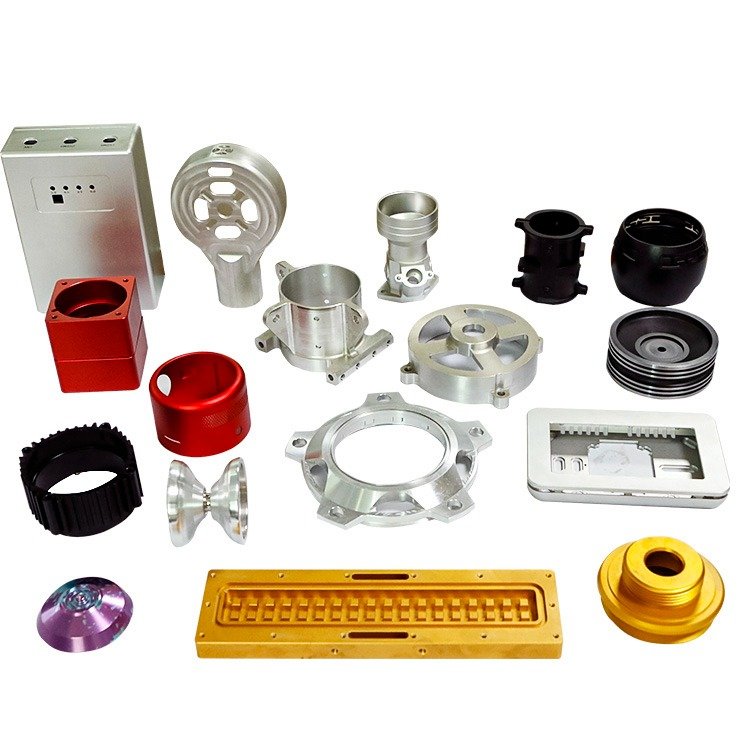
TL;DR: Picking a Canadian 5-axis CNC machining shop comes down to five things you can actually verify: real simultaneous 5-axis capability (not 3+2 in a costume), industry-matched certifications like AS9100 or ISO 13485, CGP registration if there’s any defense or ITAR flavor to the work, in-house CMM inspection, and a quote that shows you the shop actually read your drawing. Verify each one with a floor visit or a video audit before you sign anything.
The “5-Axis” Trap: Simultaneous vs. 3+2 Positional
A true 5-axis machine moves all five axes at the same time during a cut. A 3+2 machine tips two rotary axes into position, locks them, and then cuts with the other three. Sounds like a small distinction on paper. It isn’t. It determines whether your impeller or turbine blade can be made in one setup, or whether the shop is going to fight it for a week and hand you back something with witness marks all over the flow surfaces.
Plenty of job shops still market 3+2 positional work as “5-axis” because the machine technically has five axes of motion. Read the marketing copy carefully. If the case studies are all prismatic housings and manifolds, you’re looking at a 3+2 shop.
Here’s what happens when a swarf-milling part goes to a 3+2 positional shop: they approximate the curves by locking the rotaries at multiple fixed angles and running 3-axis ball-nose passes between them. You get step-overs in the surface finish, longer cycle times, and tolerance stacking across every reindex. On a turbine blade that’s a scrap part.
| Part Geometry | Machining Strategy Required | Why |
|---|---|---|
| Turbine impellers & blisks | Simultaneous 5-Axis | Continuous tool vector control to avoid gouging on the flow surfaces. |
| Deep pocket aerospace housings | 3+2 Positional | Rotaries just need to tilt the part to clear internal walls; no continuous motion needed. |
| Undercut medical implants | Simultaneous 5-Axis | Swarf cutting across contoured surfaces. |
| Multi-sided electronics enclosures | 3+2 Positional | Machines 5 sides of a rectangular block in one setup. Bread and butter for 3+2. |
Four questions to ask the shop, in this order:
- Which CAM package do you use for simultaneous toolpaths? (You want to hear hyperMILL, Mastercam, or NX. If they say “SolidCAM for turning,” pause the call.)
- Trunnion table or articulating head?
- Can you show me a simultaneous program running on the floor right now, on a video call?
- Is Tool Center Point Control (TCPC) enabled on the control?
If they answer the first three cleanly and don’t know what TCPC is, they’re a 3+2 shop.
Certifications That Actually Matter (By Industry)
Generic ISO 9001:2015 proves the shop has a documented quality system. That’s it. For anything regulated, it’s the floor, not the ceiling.
AS9100 Rev D is the aerospace standard, and it adds 105 specific requirements on top of ISO 9001:2015, heavy on risk management and supplier flow-down. Medical work needs ISO 13485:2016, which aligns with FDA 21 CFR Part 820 and drives contamination control and device history records. Automotive Tier 1 and 2 want IATF 16949.
| Industry Vertical | Minimum Required Certification | Nice-to-Have |
|---|---|---|
| Commercial Aerospace | AS9100 Rev D | Nadcap (heat treat, NDT, and other special processes) |
| Medical Devices (Class II/III) | ISO 13485:2016 | ISO Class 7 Cleanroom Assembly |
| Automotive Tier 1/2 | IATF 16949 | ISO 14001 |
| General Industrial | ISO 9001:2015 | — |
One thing buyers skip: check the registrar. A certificate issued by a body accredited by the Standards Council of Canada (SCC) or ANAB carries weight. An unaccredited certificate is wallpaper.
The Canadian Compliance Layer Most Buyers Overlook
The Controlled Goods Program. If your part has military applications, ITAR export control warnings on the drawing, or lives inside a satellite, tactical, or targeting assembly, the shop needs to be CGP-registered before you even email them the STEP file. Sending the CAD without checking is a security breach on your end, not theirs. PSPC administers the program and it’s Canada’s rough equivalent of the ITAR facility framework.
For federal defense contracts, the Industrial and Technological Benefits (ITB) policy makes prime contractors put business activity equal to the contract value into Canada. Sourcing from a CGP-registered Canadian SME feeds ITB directly. Primes love it. Use that as leverage in your negotiation.
Cross-border tariff exposure is the other thing nobody wants to talk about. In July 2026 the U.S. imposed Section 301 tariffs (10%) and Section 338 tariffs (50%) on various imports. Goods that qualify under CUSMA Chapter 4 rules of origin, meaning they meet the tariff shift or the Regional Value Content threshold through Canadian machining, stay exempt. Your Canadian shop needs to be able to issue a proper CUSMA certification, not just wave at it. Ask.
You need a CGP-registered shop if… your drawing carries ITAR markings, references military end-use, or involves satellite, tactical, or advanced targeting geometries. Even quoting the file without verifying the shop’s CGP status is a breach.
Where Canadian 5-Axis Capability Actually Lives
Canadian precision capacity clusters by region and by end market. Send oilfield tooling to a Montreal aerospace shop and you’ll overpay. Send turbine blades to a prairie ag manufacturer and you’ll get scrap. Match the cluster to the work.
- Montreal / Longueuil Aerospace Corridor — Bombardier, Bell, Pratt & Whitney Canada. AS9100D is table stakes here. Superalloys, automated FMS cells, real simultaneous 5-axis on the floor.
- Southern Ontario Aerospace & Defense Triangle — Mississauga through Cambridge and up to Kitchener-Waterloo. Macfab and VisionForge are here, along with a lot of quieter shops running Matsuura MX-520s for defense and medical.
- Windsor-Essex & GTA — automotive tooling DNA. High-volume palletized 3+2, IATF 16949 shops. Great if you have a fixture-heavy program.
- Calgary & Edmonton — downhole oil and gas. These shops eat Inconel and 4140 for breakfast, usually in long cylindrical formats. They’re not the ones to call for a 5-axis medical part.
- Vancouver / Lower Mainland — clean tech, specialized medical, marine.
For defense-capable shortlisting, the CADSI member directory covers 900+ registered suppliers and lets you filter by capability. Not glamorous, but it works.
Reading a Quote Like an Engineer, Not Like a Buyer
This is where most sourcing decisions go wrong, so I’m going to spend more time here. A real 5-axis quote is a manufacturing plan with a dollar figure attached. Not a dollar figure with a “standard inspection included” line at the bottom.
The 2026 median base wage for a Canadian CNC machinist is around $36.35/hr. Once you layer in tooling, coolant, programming time, CAM seat cost, machine amortization on a $600K trunnion, and floor overhead, shop rates land somewhere in the $120–$180+ CAD/hr range depending on region and certification. If a quote comes back at $75/hr on an AS9100 job, they either missed a setup, ignored a tight GD&T zone, or they’re planning to run it on a 3-axis mill and hope you don’t notice. All three happen more often than you’d think.
Setup count is the single most useful signal on a quote. A 5-axis machine should collapse a 6-op part into 1 or 2 setups. If the quote lists 4 setups for a “5-axis” job, that’s a 3-axis quote in a dress. Ask them to walk you through the process plan on a video call and watch what happens when you ask which operation is the trunnion op.
DFM feedback matters even more. The best shops read your drawing, find the tight internal corner you specified without thinking, and email back asking if they can open the radius from 0.030″ to 0.050″ to hit it with a standard end mill instead of a custom form tool. That single suggestion can drop your part cost 15%. A shop that returns a quote with zero questions and blind CAD acceptance is a shop that’s going to hand you back a nonconformance and a change order six weeks later. Every time.
| Quote Element | Green Flag | Red Flag |
|---|---|---|
| DFM Feedback | Asks to open an internal corner radius to match a standard end mill. | Zero questions, blind CAD acceptance. |
| Setup Count | Explicitly listed (“OP1: 5-axis trunnion, OP2: soft jaws”). | No manufacturing plan. |
| Inspection | AS9102 FAI line item, CMM report plan named. | “Standard inspection included.” |
| Tolerances | Calls out the tight GD&T zones by feature. | No mention of your ±0.0005″ true position callout. |
One more thing that experienced buyers do: send the same RFQ to three shops and compare not the prices but the DFM feedback. The price differences will resolve themselves. The feedback tells you who actually opened the file.
Total Landed Cost — Canada vs. U.S. vs. Overseas
Canadian shops run 10–25% higher per hour than some U.S. shops on paper. On landed cost with duties, FX, freight, and lead-time carrying cost included, the math often flips. Buyers who evaluate on piece price alone overrun their budget at the dock.
Total Landed Cost =
Piece Price + FX Exposure (USD/CAD) + Freight + CUSMA Duty Rate (usually 0%) + Inventory Carrying Cost + Rework Risk Premium
Overseas sourcing pencils out for non-regulated, non-critical parts above 10,000 units where a container’s worth of inventory can absorb the risk. For AS9100 or CGP-regulated low-volume work in the 50–5,000 unit range, IP protection, zero-tariff cross-border logistics under CUSMA, and lower scrap risk usually put Canadian shops ahead.
The Shop Visit / Virtual Audit Checklist
Do not award a multi-year 5-axis program without seeing the floor. If you can’t fly out, mandate a live video walkthrough. Not a highlight reel they edited last quarter.
Machine brands and ages first. Current-generation DMG Mori, Hermle, Matsuura, and Makino signal real investment in continuous 5-axis. A shop whose newest 5-axis is a decade old is going to give you thermal drift problems on tight tolerances.
Then talk to the shop floor lead. Not the sales rep. Ask them:
- What’s your spindle warmup procedure on a Monday morning? (Thermally stable machines have a specific routine. If the answer is “we just start cutting,” walk away.)
- How do you verify A and B axis centerlines before a tight-tolerance run?
- Which CAM package, and do you verify toolpaths in Vericut or a similar simulator before posting?
And look at the coolant sumps. Tramp oil floating on the coolant tells you everything about how the shop is run. A shop that lets its coolant go rancid will cut corners on your parts.
Building a Shortlist — A Practical Process
Don’t blast RFQs to 30 shops off a Google search. You’ll get 30 bad quotes and burn a week reading them.
- Define the certification floor. Anyone below your compliance requirement (AS9100, ISO 13485, CGP) is out. Non-negotiable.
- Filter by regional cluster. Cross-reference CADSI and the Canadian Tooling & Machining Association (CTMA) directories against the industry map above.
- Send a probe RFQ. Pick a real part with tricky GD&T and one deliberately tight internal corner radius. Include a Nadcap-flowdown callout if aerospace.
- Score on DFM, not price. The shops that catch the tight radius and email back asking to open it are the shops you want.
- Audit the top two. Run the video audit checklist. Then issue the PO.
Step 3 is where you separate the shops that read drawings from the shops that plug files into an auto-quoter. That single filter will save you more money than any negotiation tactic.
FAQ
What’s the real cost difference between 3+2 and true simultaneous 5-axis in Canada?
Simultaneous runs 20–40% higher per hour than 3+2 because of the machine capital cost, CAM software with proper simulation, and the seniority of the programmer running it. For a complex part, though, simultaneous collapses multiple setups into one and the total part cost drops even at the higher hourly rate. Piece price and hourly rate move in opposite directions here, which is what trips up first-time buyers.
Do I need a CGP-registered shop?
If your technical data or the part itself has military or national security applications, or the drawing is ITAR-controlled in the U.S., yes. Sending controlled CAD files to an unregistered shop is a federal offense in Canada.
How long does a 5-axis prototype take in Canada?
Three to six weeks is normal. Expedite gets you to seven to ten days with a 50–100% premium for queue-jumping and weekend programming.
Are Canadian shops price-competitive with U.S. shops?
Yes, once FX and CUSMA are in the picture. Canadian shops run $120–$180+ CAD/hr, but the exchange rate and zero-tariff status under CUSMA typically land Canadian work 10–15% under U.S. domestic on identical AS9100 jobs.